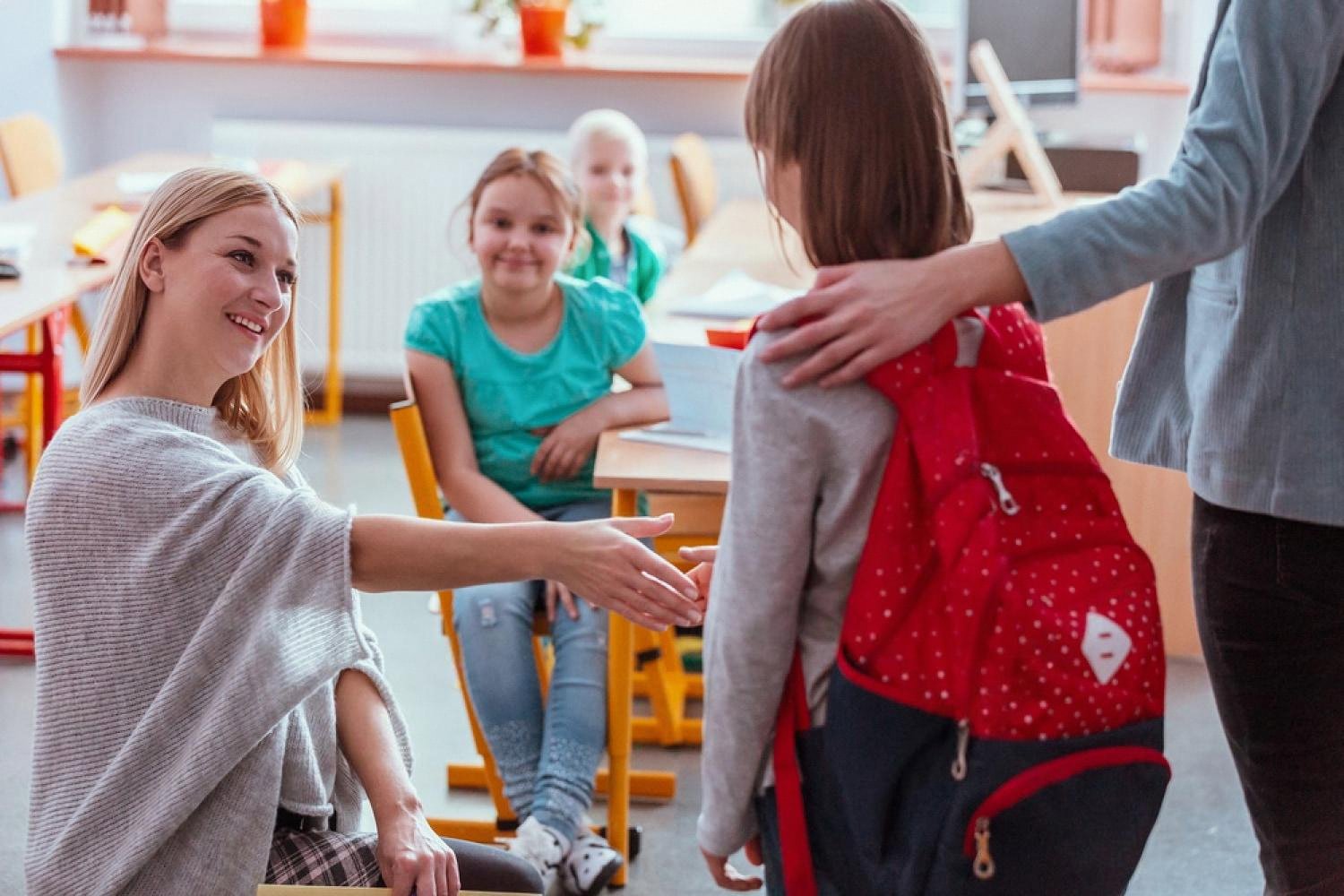
First-grader adaptation
The way children start school in the UAE is quietly changing
Grade 1 in the Emirates now looks different from a decade ago. Schools stagger the opening days, teachers meet families before term begins, and the first week is closer to a soft landing than a classic timetable. The goal is simple: help a six-year-old feel safe enough in a new room, with new children and a new adult, that learning can actually happen.
Parents in Dubai, Abu Dhabi and Sharjah are asking better questions during the school admission stage, and schools are answering with structured adaptation plans instead of a single orientation morning. What follows are the four trends shaping that shift, and what they mean for a child walking through the gate for the first time.
Trend 01
Preparation starts at home, weeks before day one
The single biggest predictor of a calm first week is what happens in the living room in August. UAE families are increasingly treating the transition from KG2 to Grade 1 as a real conversation, not a surprise. Talking through what school will look like, who the teacher is, and what the daily rhythm will feel like removes most of the fear before it forms.
- Name the change out loud. Tell the child that a new stage is starting, with new friends, new adults and a new routine.
- Walk the route. Drive past the campus, point out the gate, the flag, the bus stop.
- Rehearse the small stuff. Opening a lunchbox, asking for the toilet in English or Arabic, packing the bag the night before.
- Keep the tone light. Curiosity, not warnings. “You will meet lots of children” works better than “you have to behave”.


Trend 02
The teacher, not the building, is the anchor
Six-year-olds do not bond with corridors. They bond with the adult who says their name correctly on the first morning. UAE schools that report the smoothest starts share one habit: the class teacher personally greets each new first-grader at the door, walks them into the room, introduces them to the class, and shows them their seat.
That short interaction, less than a minute per child, does more for adaptation than any welcome pack. The child learns three things at once: the teacher knows me, the teacher is friendly, and there is a place here that is already mine.
“In the next few years, the first two weeks of Grade 1 will look less like lessons and more like community-building. Schools that get that right will keep families for the full twelve years.”
Trend 03
The first days are deliberately unstructured
A generation ago, day one meant an open textbook and a full timetable. Today, most quality schools in the UAE treat the opening days as social days: games, drawing, tours of the campus, small group activities, songs, and time on the playground. The children are not wasting time, they are building the trust that lets a classroom function.
- Circle time and introductions. Every child says their name, one thing they like, and picks a spot on the carpet.
- Guided free play. Puzzles, blocks and colouring, with the teacher moving between tables and learning who talks to whom.
- Short campus tour. Library, canteen, prayer room, the nurse’s office, the assembly hall.
- One tiny task. Something achievable, like decorating a name card for their desk, so every child leaves day one with a small win.
Trend 04
Learning arrives slowly, and often in teams
Once the room feels familiar, structured learning can enter without shock. The pattern that seems to work best in UAE classrooms is to introduce academic tasks in pairs or small groups first, then move to individual work later. Group tasks give shy children a reason to talk to a neighbour, and give the teacher a natural way to see who needs extra support.
- Paired reading before independent reading
- Table-based maths games before worksheets
- Short lessons of 15 to 20 minutes with movement breaks
- Homework introduced gradually, usually from week three
According to UNICEF the quality of a child’s first weeks in formal school has measurable effects on both academic outcomes and mental wellbeing years later. The UAE’s current direction, gentler starts and more team learning, lines up with that evidence.
Adaptation should be smooth, with kindness toward children and without overload. Everything else is just paperwork.
What parents in the UAE can watch for
A well-adapted first-grader does not always come home saying “I love school”. More often the signs are quieter: eating a normal amount at dinner, sleeping through the night, mentioning a classmate by name within the first fortnight, and asking questions about tomorrow rather than dreading it. If those markers are missing after three to four weeks, it is worth a short conversation with the teacher rather than waiting for a report card.
The trend across the Emirates is clear. Schools that treat the start of Grade 1 as a relationship, not a checklist, produce children who learn faster later. For families choosing a school this year, the questions worth asking are less about facilities and more about the first two weeks: who greets my child, what does day one look like, and how will you tell me if something is off.
Frequently asked questions
How long does adaptation to Grade 1 usually take?
Most first-graders in the UAE settle within four to six weeks. The first two weeks are the noisiest emotionally, the next two are about routine, and by week six a child usually has a friend, a favourite part of the day, and a sense of the classroom rules.
If a child is still crying at drop-off after six weeks, or refusing to talk about school at home, that is the point to ask the teacher for a short meeting.
Should I visit the school with my child before term starts?
Yes, and the shorter and calmer the visit, the better. A ten-minute walk around the campus with the child holding your hand does more than a long formal tour. Point out the classroom door, the toilets, the canteen and the pickup gate.
Many UAE schools also run a meet-the-teacher afternoon in the last week of August. Attend it if you can, even briefly.
What if my child cries every morning in the first week?
Morning tears in week one are normal and rarely mean the school is wrong for the child. Keep the drop-off short, warm and predictable: one hug, one clear sentence, and leave. Long goodbyes make things worse.
Talk to the teacher about how the child behaves after you leave. In most cases the crying stops within ten minutes and the day proceeds normally.
How much homework is reasonable in Grade 1?
In the first month, very little, and often none. From roughly week four onwards, expect around 15 to 20 minutes of light work per day: a page of reading, a short number activity, or a picture to finish.
If homework is causing tears at home most evenings, that is a signal to speak to the teacher rather than push through.
How do I help a shy child make friends in a new class?
Ask the teacher to seat your child next to a calm, sociable classmate for the first weeks. Arrange one short playdate outside school within the first month, ideally with a child from the same class. One steady friendship is enough at this age.
Avoid pushing your child to “go and play with everyone”. A quiet child who has one good friend is fully adapted.
Does language of instruction affect adaptation?
It can, especially in the UAE where children often start Grade 1 in English while speaking Arabic, Russian, Hindi or another language at home. Give the teacher a short list of the words the child already knows for basic needs: toilet, water, hungry, help.
Most first-graders reach functional classroom English within one term if the school uses visual cues, songs and repetition consistently.

Baseball fan, self-starter, fender owner, Eames fan and brand builder. Operating at the junction of design and programing to create not just a logo, but a feeling. German award-winning designer raised in Austria & currently living in New York City.